What is cycle syncing?
This article walks through what the term actually means, where it came from, what the research supports, and where the popular version overstates the case.
The basic idea in one paragraph
Across a typical cycle, hormone levels rise and fall in a recognizable pattern. Estrogen climbs through the first half, peaks around ovulation, drops, then rises again in the second half before falling sharply at the end. Progesterone is low for the first half, rises in the second half, then drops. These fluctuations have downstream effects on neurotransmitters, body temperature, energy metabolism, and mood. Cycle syncing says: instead of pretending every day is the same, structure work and life so that demanding cognitive work happens when hormones support it, and recovery happens when they do not.
The four phases
The standard four-phase model maps the cycle into segments by hormonal state:
- Menstrual phase (cycle days 1–5). Estrogen and progesterone are at cycle minimum. Energy is typically low. Some research suggests right-brain activity is relatively higher, supporting strategic and big-picture thinking. This phase is often associated with reflection and planning rather than execution.
- Follicular phase (cycle days 6–13). Estrogen rises. Brain-derived neurotrophic factor (BDNF) and neuroplasticity increase. Cognitive flexibility, openness to new experience, and tolerance for uncertainty are at a high point. Often described as the best phase for learning new skills, starting projects, and complex problem solving.
- Ovulatory phase (cycle days 14–16). Estrogen peaks; testosterone has a small bump; luteinizing hormone surges. Verbal fluency and social cognition are measurably higher in some studies. Often associated with presentations, hard conversations, and high-stakes social interactions.
- Luteal phase (cycle days 17–28). Progesterone rises through the first part of the phase, then drops; estrogen drops sharply at the end. Detail orientation tends to be high early in the phase. Fatigue and emotional reactivity tend to rise late. Often associated with editing, organizing, and finishing tasks early, and reducing demands at the end.
These phases vary by individual. The lengths above are based on a 28-day cycle; cycles between 21 and 35 days are within the typical range.
Estrogen (solid) and progesterone (dashed) across a typical 28-day cycle.
Where the term came from
The phrase "cycle syncing" entered popular vocabulary through Alisa Vitti's 2014 book WomanCode and her FloLiving methodology. The underlying physiology is older. Endocrinology research on cycle phases and cognition dates back to at least the 1990s. Studies on verbal fluency in the ovulatory phase, on memory consolidation across phases, and on emotional reactivity in late luteal have appeared in peer-reviewed journals for decades.
What Vitti and the wellness genre did was assemble those findings into a prescriptive lifestyle system: eat these foods in this phase, do this workout in that phase, schedule meetings in this window. The packaging is newer than the underlying science.
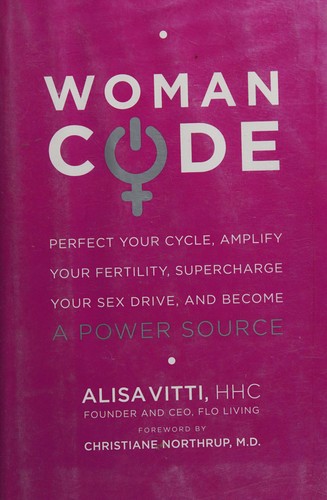
WomanCode by Alisa Vitti (HarperOne, 2014), where the term cycle syncing was popularized. View on Amazon. Cover image via Open Library.
What the research actually supports
The strongest claims have replicated evidence:
- Verbal fluency is measurably higher around ovulation. This finding has been documented in multiple studies using standard verbal-fluency tasks.
- Neuroplasticity and BDNF rise with estrogen. The link between estrogen and BDNF is established in both animal and human studies.
- Emotional reactivity and certain mood symptoms can rise in late luteal. This is the basis of the clinical recognition of premenstrual syndrome and, in more severe cases, premenstrual dysphoric disorder.
- Body temperature shifts and metabolic rate rises slightly in luteal. Documented in basal body temperature tracking used in fertility awareness methods.
The weaker claims include:
- Specific food prescriptions per phase (eat seeds in one phase, avoid them in another) are not supported by trial evidence. The "seed cycling" practice in particular has minimal research backing.
- Specific workout intensity prescriptions per phase are based on physiology but lack large-scale human trials confirming that following them improves outcomes versus exercising consistently across the cycle.
- The idea that cycle syncing is universally required for women's optimal performance is not supported. Many women perform consistently across phases. Effect sizes vary widely.
What cycle syncing is not
Cycle syncing is not medical treatment. It does not diagnose, treat, or prevent any condition. If you have irregular cycles, severe pain, mood symptoms that disrupt daily life, or other concerns, those are conversations for a clinician, not a calendar app.
Cycle syncing is also not a moral framework. It does not mean a woman who powers through every phase identically is doing something wrong. The point is to give a framework for noticing patterns, not to add another checklist to fail at.
How to start, briefly
If the idea sounds useful, the lowest-cost first step is observation:
- Track one full cycle. Note your energy, mood, focus, and physical state day by day.
- Compare your notes to the standard four-phase model. See where they line up and where they diverge.
- Pick one area (work scheduling is usually highest leverage) and adjust for one month.
- Treat the result as a hypothesis. If your luteal phase is genuinely better for editing than your follicular phase, keep that pattern. If not, the model is wrong for you.
For deeper guidance, see how to start cycle syncing for a concrete beginner action plan. To check the research base directly, see Lumen's methodology page.
How Lumen fits in
Lumen is a free cycle phase calculator and weekly planner. It reads three inputs (last period start date, average cycle length, and period length) and tells you which phase you are currently in, which task types best fit today's hormonal state, and a week-ahead view by phase.
It is privacy-first: cycle data lives in the browser, never on a server, no account required. It is informational, not medical. It treats phase recommendations as starting hypotheses to test, not prescriptions to follow.
If you want to start cycle syncing for your work week specifically (when to schedule deep focus, presentations, learning, editing), Lumen is the smallest possible tool to do it. Try the calculator, no signup, takes 30 seconds.
Bottom line
Cycle syncing is a useful frame for noticing that the hormonal context of work matters. The strong version of the claim is overstated. The weak version, that knowing your phase is information worth having when you plan a hard week, is well-supported and low-cost to act on.